Empowering the Kingdom of Tonga: A Strategic Leap Towards Resilient and Sustainable Transport Infrastructure
With a clear desire to improve local technical skills, gain independent materials science accreditation, increase infrastructure resilience and transport network sustainability, the Kingdom of Tonga engaged the National Transport Research Organisation (NTRO) to partner with them on a long-term Strategic Transport Infrastructure Advisory Program (STIAP).
This article was featured on NTRO on April 29, 2026
With a clear desire to improve local technical skills, gain independent materials science accreditation, increase infrastructure resilience and transport network sustainability, the Kingdom of Tonga engaged the National Transport Research Organisation (NTRO) to partner with them on a long-term Strategic Transport Infrastructure Advisory Program (STIAP).
This transformative initiative tackles the challenges of a dispersed island nation by examining ways to modernise road and aviation networks, to optimise the use of local materials, and to empower the Ministry of Infrastructure through data-driven infrastructure understanding. Critically, it also has a central focus on capacity building.
From advanced infrastructure assessment across road and aviation networks to in-field roadworks analysis, review of transport network plans, in-country tailored training programs, detailed analysis of materials science laboratory processes and advanced planning for a new transport materials research and laboratory centre, as well as policy advisory work for emerging major projects in Tonga (including the design and development of the new Fanga’uta Lagoon Bridge), the first year of STIAP has laid the foundation for a new infrastructure future for Tonga.
The program has set a new benchmark for infrastructure development across the Pacific.
1. Introduction
The Kingdom of Tonga, a Pacific Island nation comprising 169 islands, faces unique challenges in maintaining and developing its transport infrastructure. Geographic dispersion, limited local resources and technical skills, contested finances and increasing climate-related risks, necessitate a strategic and sustainable approach to infrastructure development. In response, the National Transport Research Organisation (NTRO), in partnership with Tonga’s Ministry of Infrastructure (MOI), launched the Strategic Transport Infrastructure Advisory Program (STIAP) in March 2024.
The program was purposefully designed as a comprehensive, multi-year initiative to assess, enhance and future-proof Tonga’s transport infrastructure across road, maritime and aviation sectors. The program also included a determined effort to build local capacity, improve asset management practices, and align infrastructure development with global sustainability goals. With Year One program works now completed, this article reflects on the program’s objectives, individual program streams and long-term aspirations.
1.1 Program Objectives
The STIAP program was structured around four strategic objectives:
Infrastructure baselining to ascertain the current condition and capacity of Tongan infrastructure across road, maritime and aviation assets;
Improving standards to help uplift and develop Tonga infrastructure standards to ensure infrastructure is stronger, sustainable and resilient in the context of a changing pacific environment;
Financial value by realising significant financial savings through advanced infrastructure understanding and targeted asset management/maintenance planning;
Capacity building to increase the practical and technical skills of the Tongan people (public and private sectors), with the aim of increasing self-reliance.
These objectives were pursued through a series of ten interlinked program workstreams, with each playing their role in advancing the transformation of Tonga’s transport infrastructure.
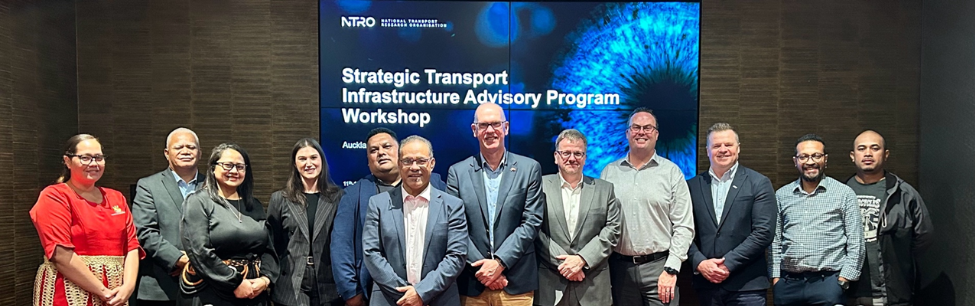
Figure 1: NTRO Team Members with the Deputy Prime Minister for Tonga, the CEO of the Ministry of Infrastructure, the Director of Civil Aviation, and key members of the MOI Team.
2. Program Streams and Year One Outcomes
2.1 Infrastructure Measurement
The foundational component of STIAP was the comprehensive measurement and assessment of existing infrastructure.
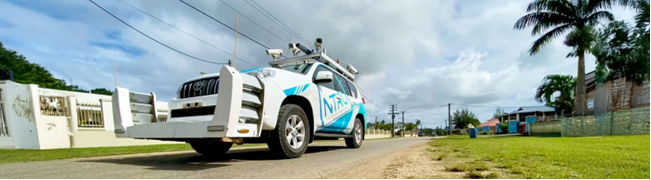
NTRO deployed its Network Survey Vehicle (NSV) to collect high-resolution data on road conditions across Tongatapu, Vava'u and the two major airports Fuaʻamotu International Airport and Lupepauʻu International Airport. The NSV captured metrics such as surface roughness, rutting, macro-texture and road geometry, supported by a multi-camera imaging system for asset inventory. This data formed the basis for all subsequent planning and design activities, ensuring that interventions were grounded in objective, up-to-date information.
Figure 2: NTRO NSV on Tongatapu Island
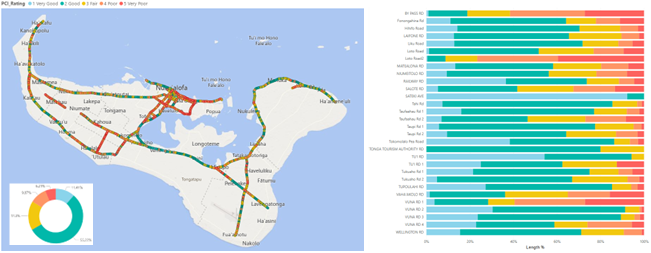
The comprehensive measurement of Tonga’s road and aviation infrastructure provided the first-ever digital baseline of asset conditions across the Kingdom. This initial data set now empowers MOI and other government entities (such as Tongan Airports Limited (TAL)), to consider evidence-based decisions, prioritise maintenance and plan future investments with increased confidence. Limited road and aviation maintenance funds can be directed to priority areas.
Figure 3: Road Condition Data Insights, Pavement Condition Index (PCI) developed using the road survey data collected using NTRO’s NSV
The use of NTRO’s NSV introduced advanced data collection capabilities for the first time in Tonga.
The NSV is now permanently based in Tonga so that annual surveys (or more regular if required) can be undertaken. Equally, the NSV can also now easily be deployed to neighbouring Pacific nations, fostering regional-wide collaboration to uplift baseline infrastructure understanding through the capture of data-rich information of both sealed and unsealed road networks, as well as regional airport pavements.
1.2 Asset Performance and Management
The transformation of raw data into actionable insights was a key success of the STIAP program in Year One. NTRO’s Asset Performance and Management team worked closely with MOI to integrate survey data into their asset management practices. This information enabled the generation of network condition reports and visual maps and will allow for the development of predictive maintenance models.
For roads, this meant the development of tailored Levels of Service (LoS) and the creation of surface and pavement condition indices. These tools allowed MOI to prioritise maintenance activities, estimate budgets and plan forward works with greater confidence.
In the aviation sector, baseline assessments were conducted for all six of Tonga’s airports, including two international and four domestic airfields. These assessments covered both airside and landside infrastructure, providing a detailed picture of pavement conditions, drainage systems, lighting, and terminal facilities.
NTRO also supported the conversion of runway ratings from Pavement Classification Number (PCN) to Pavement Condition Rating (PCR), aligning with international best practices and improving safety and compliance. The development of runway PCR results at the two international airports, signalled the first of its kind in the Pacific Region.
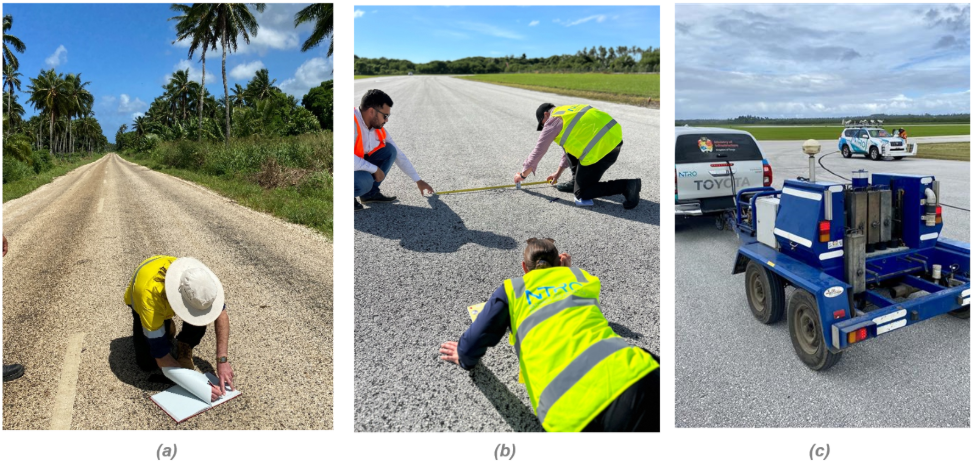
Figure 4: NTRO team undertaking (a) road inspections, (b) runway pavement inspections, and (c) FWD testing on runways for PCR assessment
2.3 Materials Science and Laboratory Services
Tonga’s reliance on coral limestone as a primary construction material presented both opportunities and challenges. STIAP included a dedicated stream focused on materials science, with NTRO conducting resource investigations into quarry materials, geotechnical exploration activities in the northernmost remote islands (Niuafoʻou and Niuatoputapu) and evaluating the performance of local aggregates and concrete.
The program developed engineering guidelines for the optimal use of coral limestone, addressing issues such as premature aging of bitumen binders and the limitations of sprayed seals. These guidelines were informed by laboratory testing and field performance data.
To support ongoing quality assurance, NTRO is also providing special advisory services regarding the redevelopment of laboratory facilities at MOI headquarters in Tonga’tapu. Work has included site planning, building design and layout advisory services, recommendations regarding necessary upgrades to laboratory equipment including new equipment, training for laboratory staff, and steps toward international accreditation.
The evaluation and optimisation of local materials, particularly coral limestone and harder basaltic materials potentially available in the northern islands, will reduce Tonga’s dependence on costly imported construction materials. This not only lowers project costs but also supports local industries through resources payment and enhances supply chain resilience.
Upgrading MOI’s laboratory facilities will ensure that Tonga can independently verify material quality, improving construction standards and enabling international recognition of its testing capabilities.
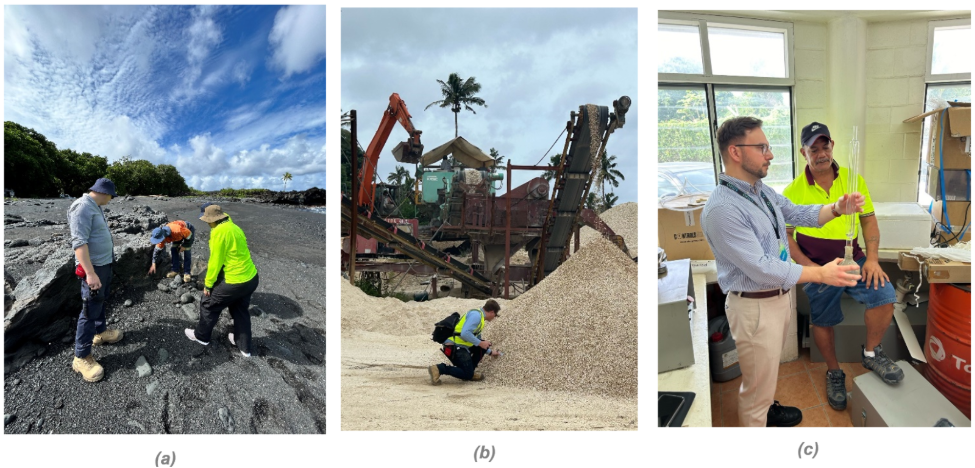
Figure 5: (a) NTRO & MOI undertaking geotechnical explorations, (b) NTRO undertaking quarry investigations, and (c) NTRO undertaking laboratory investigations
2.4 Transport Safety
Improving road safety is a central concern of the Tongan Government. During the first year of the program, NTRO’s transport safety specialists conducted a comprehensive review of crash data, traffic volumes and existing safety plans. This was followed by in-country site visits to observe road user behaviour, intersection performance and school-zone safety.
The team identified several quick-win interventions, including improved line marking, enhanced signage and targeted upgrades at high-risk intersections. These measures were designed to deliver immediate safety benefits while informing a longer-term road safety strategy.
The identification of short-term safety improvements has immediate life-saving potential. Longer-term strategies developed under STIAP will help reduce crash rates, improve traffic flow and create safer environments for all road users. These improvements also support tourism and economic activity by making travel safer and more reliable for a broad range of users.
Future stages of the program will focus on embedding these improvements through training, pilot projects and the development of a national road safety framework.
2.5 Infrastructure Sustainability
Sustainability was embedded throughout STIAP, with the United Nations Sustainable Development Goals (SDGs) serving as a guiding framework. NTRO developed a dedicated STIAP Sustainability Analysis tool to track progress against relevant SDGs, including those related to infrastructure, climate action and economic development.
Annual sustainability reports are being produced, highlighting achievements such as reduced reliance on imported materials, improved resilience to climate impacts, and increased local employment through training and capacity building.
NTRO also worked with MOI to prioritise SDG actions most relevant to Tonga’s context, ensuring that sustainability efforts were both meaningful and achievable.
2.6 Pavement Design and Resilience
Tonga’s diverse terrain and exposure to extreme weather events require innovative approaches to pavement design. NTRO’s pavement engineering team collaborated with MOI to develop designs that optimise durability, reduce maintenance costs and enhance climate resilience.
Key activities included:
Assessing the suitability of local materials for pavement construction;
Spending time in-country during maintenance operations with local road crews, examining construction and maintenance practices and procedures;
Initial investigations into accounting for flooding, sea-level rise and temperature extremes;
Conducting in-country training workshops to transfer knowledge to MOI engineers and contractors.
This dedicated road pavement stream is designed to assist the MOI develop and maintain robust pavement structures that are better suited to Tonga’s environmental conditions and long-term needs.
Ultimately, this will reduce costs and disruptions (due to lower intervention events) while improving connectivity across islands. Training MOI staff in new construction and maintenance techniques will ensure that the benefits are sustained over time and that future projects are designed with resilience in mind.
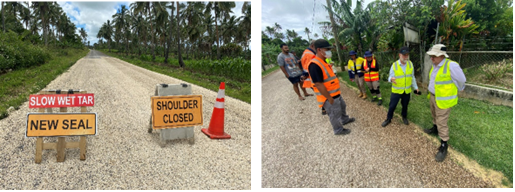
Figure 6: NTRO & MOI team undertaking sprayed seal inspections
2.7 Infrastructure Advisory and Standards
Through this program stream, NTRO provided expert advisory services for several high-profile projects, most notably the Fanga’uta Lagoon Bridge. NTRO continues to support MOI through all project phases, from option assessment and tender negotiations to specification development and construction readiness.
Under this program stream, Year One activities also included the development of Tonga-specific infrastructure standards and specifications. These were co-designed with MOI staff and tailored to local conditions, materials and construction practices.
Two national standards were completed during the program, with a roadmap for future standard development established.
2.8 Training and Development (Capacity Building)
Capacity Building is the cornerstone of STIAP.
During Year One of the program, NTRO delivered structured training and development programs for MOI staff and private sector stakeholders.
Training was delivered both online and in-country, covering topics such as asset management, pavement design, laboratory testing and project management.
A Capability Development Framework was created to guide future training efforts, ensuring that skills development remains a priority beyond the life of the program.
Feedback from participants indicated high levels of satisfaction and a strong desire for continued professional development.
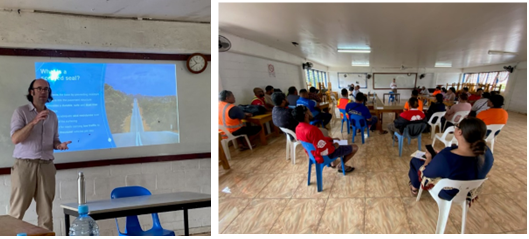
Figure 7: NTRO Team undertaking training sessions with MOI
3. Conclusion
Although in its infancy, the STIAP has already delivered a transformative impact on Tonga’s transport infrastructure sector. Through a comprehensive, collaborative and capacity-focused partnership, the program has made significant progress in:
Establishing a robust evidence base for infrastructure planning and maintenance;
Improving the quality, resilience and sustainability of road and aviation assets;
Reducing long-term costs through better asset management and local-material use;
Enhancing road safety through targeted interventions and strategic planning;
Building institutional capacity within MOI and the broader infrastructure sector;
Aligning national infrastructure development with global sustainability goals.
As Tonga continues to address the challenges of climate change (including the increasing severity of storm and natural weather events), economic development and regional connectivity, the NTRO will continue to partner with MOI – with a focus of building in resilience, rather than locking in continuous vulnerability.
Year One of the program has not only delivered immediate improvements but also laid the foundation for a more resilient, self-reliant and sustainable transport infrastructure future.


.avif)