World-leading autonomous driving technology for buses has arrived in Australia, with the potential to revolutionise how we use public transport.
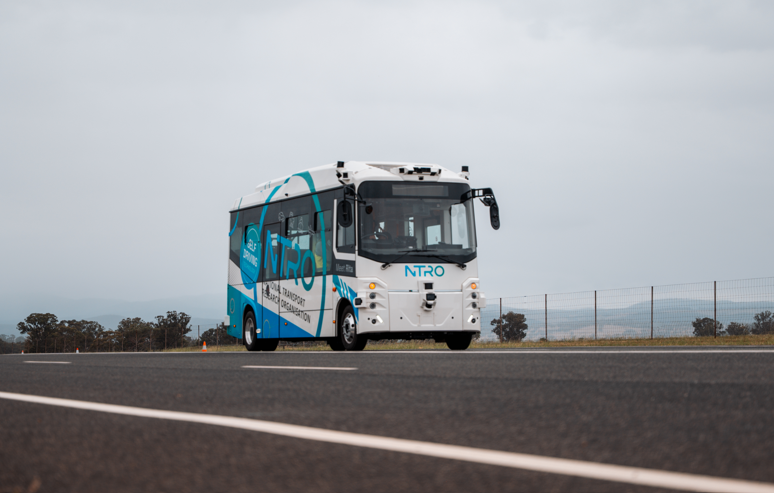
The National Transport Research Organisation (NTRO) is pleased to announce the acquisition for Australia and New Zealand of a mid-sized automated driving (AD) bus – known globally as Robobuses - from TIER IV Japan.
The bus, named Rita, is in Australia and is already in testing.
It has already been fine-tuned for local conditions through local testing. NTRO plans to deploy Rita to test and demonstrate high automation (driverless - no driver intervention required) and conditional automated driving (driver as a fallback), initially on test tracks before progressing to on-road testing and in-service use cases in public transport.
The bus, which seats 15 passengers and has a top speed of 35 km/h in autonomous driving modes, is also fully electric.
NTRO has a strong history in automated vehicle demonstration. It was in November 2015 that NTRO (then ARRB - the Australian Road Research Board) undertook Australia’s first automated vehicle demonstration with Volvo XC 90s in Adelaide.
The bus is named after Rita Excell, who was then Executive Director of ADVI, the Australian Driverless Vehicle Initiative, which partnered with ARRB to deliver the trials.
Since then, we have seen steady progress in the operational readiness of technology with trials and deployments of robotaxis and buses around the world.
NTRO has a strong working relationship with TIER IV and is able to leverage TIER IV’s expertise in deploying many of the same mid-size buses across Japan for regional public transport.
Combined with NTRO’s hands-on experience in safely and successfully delivering many subsequent local trials over the past 10 years, we are excitedly looking forward to this next phase on Australia’s transport future road map.
Once test-track testing is complete, NTRO plans to offer the opportunity for State transport agencies, bus operators, local councils, airports and other organisations throughout Australia and NZ to experience the bus in demonstrations and in-service trials, including on public roads.
Successful, staged deployment of connected and automated buses has the potential to enable a safer public transit network, supporting the pathway to achieving Australia’s National Road Safety Strategy target of zero deaths and serious injuries on ourroads by 2050.
It is also expected this technology will help alleviate the current shortage of bus drivers in Australia, which is predicted to worsen into the future as a large percentage of the driver cohort reaches retirement age in the late 2020s.
QUOTES ATTRIBUTED TO Michael Caltabiano, NTRO Chief Executive Officer
“The acquisition of Australia’s first Robobus is an exciting moment for NTRO and Australia.
“NTRO has the skills and expertise to showcase and develop the tools for Robobus use in Australia and New Zealand, undertaking critical needs like moving elderly people from home to shops, home to hospital and return in an on call safe manner. These tasks delivered by Rita the Robobus will be cheaper and environmentally cleaner that using the current fleet of buses.
“Rita will be the watershed moment that allows local communities access to safe, secure and reliable journeys in their local communities. Models for the use of this technology from around the world have successfully focused on the delivery of trips for:
· Elderly people who are mobility challenged
· Local communities that have regular short journeys to access public facilities
· Schools that have a dedicated pick-up route for students to stop the morning and afternoon crush in school zones with private cars
QUOTES ATTRIBUTED TO Ko Miyoshi, TIER IV Chief Operating Officer
“We are delighted to partner with NTRO in bringing our autonomous bus to Australia.
"Building on our experience deploying autonomous buses across Japan, this collaboration demonstrates how advanced autonomous driving solutions can be safely and effectively applied to improve public transport.
“With Rita, we aim to show that autonomous buses can enhance mobility and provide a model for safe and reliable services in communities worldwide. This partnership reflects our commitment to advancing autonomous driving while addressing real-world transport challenges.”



.jpg)